

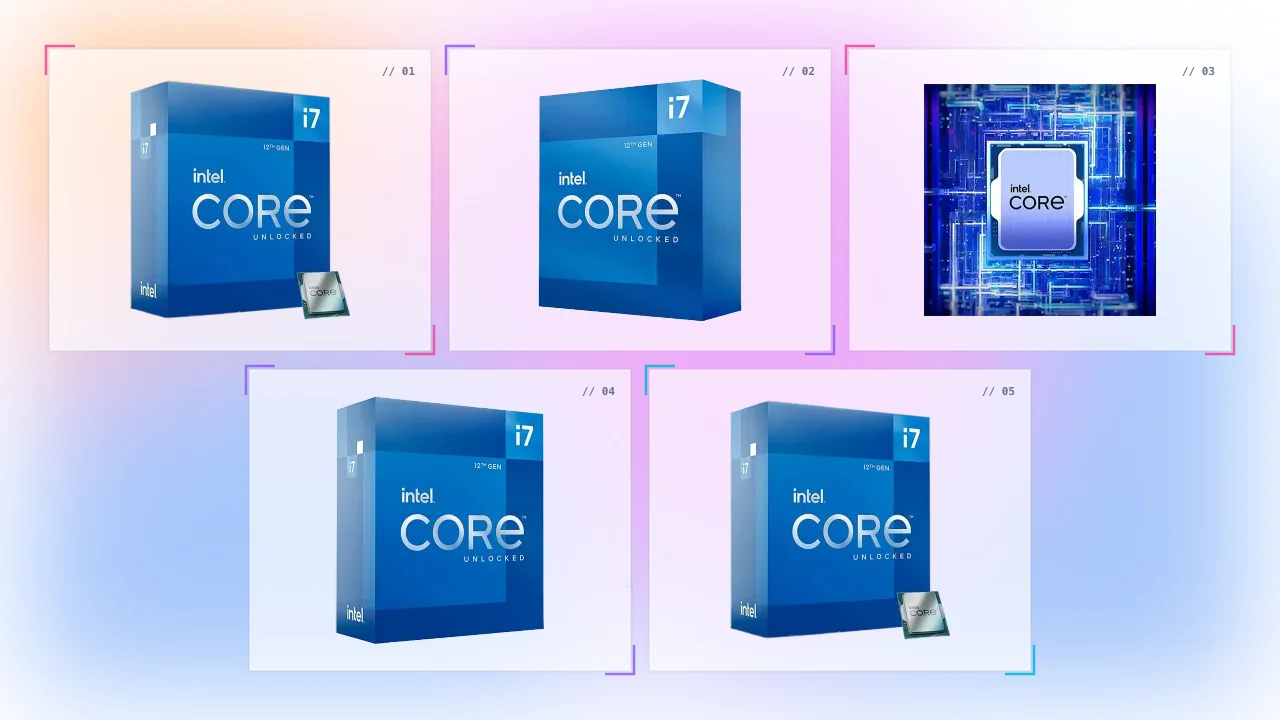
Intel does not disappoint you this time. The introduced Intel® Core™ i7-12700k in {Oman} excels in performance.
If you're still stuck in the i5 processor era, Intel® Core™ i7-12700k is all you need with all the latest updates. The new incarnation i7-12700k has been introduced as a processor with an additional performance boost from the previous generation processor i5-12600k, which was previously king with all the new processors.
The Alder Lake series comes with a new architectural design for this processor with more overclock capability. The Alder Lake series comes with a new architectural design for this processor with more overclock capability. Along with its launch, Intel has allowed users to expect as much as they want in terms of performance.
Intel Core i7-12700K Processor Features
Giving you great features to bring out the gamer in you.
The number of threads in this processor is 20 with a total of 12 cores.8 performance cores designed to maintain the efficiency of the CPU and 4 efficiency cores designed to maximize CPU efficiency. Also known as Alder Lake, Intel's 12th-generation processors represent a new generation of designs.
- Additional performance boost from the previous generation processor.
- 8 performance cores designed to maintain the efficiency.
- 4 efficiency cores designed to maximize CPU efficiency.
- With Turbo Boost Technology, performance cores can reach 4.9GHz.
- Efficiency cores can reach 3.8GHz with the help of Intel's Turbo Boost Technology.
- The base processor power is 125W, and the maximum is 190W, which is vital to know for overclocking.
- Comes with a new architectural design for this processor with more overclock capability.
- Features Intel UHD Graphics 770 integrated graphics to achieve a mesmerizing performance.
Intel® UHD Graphics 770 and 300 MHz Graphics Base Frequency. What's more a gamer want?
Shouldn't PC performance grow with technology? But where did you stuck? 12700k in {Oman} now to hold hands and raise to heights.
PC lovers like gamers and programmers will find the redesigned design more attractive. With Turbo Boost Technology, performance cores can reach 4.9GHz, whereas efficiency cores can reach 3.8GHz with the help of Intel's Turbo Boost Technology. Furthermore, the base processor power is 125W, and the maximum is 190W, which is vital to know for overclocking.
Depending on i7-12700k preferences, it might prefer high-end DDR4 over low-end DDR5 memory, but with its increased support speed and support for ECC memory, DDR5 is probably the better choice. In terms of core performance, the Core i7-12700K in {Oman} features Intel UHD Graphics 770 integrated graphics to achieve a mesmerizing performance. Launched as a rival to AMD Ryzen, Intel hasn't overpriced the processor. Therefore, there is every possibility that the value of these processors will increase enormously in the market compared to other processors in the same generation. The L3 Cache is 25 MB, designed for the CPU's processing speed. They work very fast with more support for gaming also. And 25MB is allotted for L2 cache memory for its fast process.
Intel Core i7-12700K Processor Specs
Realistic and cutting-edge characteristics let you experience the realism of gaming.
As well as being limited to gaming, the processor's design and functions are well suited for intensive media creation such as auto cad, architectural design, 3D animation, etc. And for this price, this processor is worth anything with this functionality. For all these reasons, using this processor is worth the money.
| Essentials | |
|---|---|
| Product Collection | 12th Generation Intel® Core™ i7 Processors |
| Code Name | Products formerly Raptor Lake |
| Vertical Segment | Desktop |
| Processor Number
The Intel processor number is just one of several factors—along with processor brand, system
configurations, and system-level benchmarks—to be considered when choosing the right processor for
your computing needs. Read more about interpreting Intel®
processor numbers or Intel®
processor numbers for the Data Center.
|
i7-12700K |
| Status | Launched |
| Launch Date
The date the product was first introduced.
|
Q4'21 |
| Lithography Lithography refers to the semiconductor technology used to manufacture an
integrated circuit, and is reported in nanometer (nm), indicative of the size of features built on the
semiconductor.
|
Intel 7 |
| Recommended Customer Price
Recommended Customer Price (RCP) is pricing guidance only for Intel products. Prices
are for direct Intel customers, usually represent 1,000-unit purchase quantities, and are subject to
change without notice. Prices may vary for other package types and shipment quantities. In bulk, price
represents individual unit. Listing of RCP does not constitute a formal pricing offer from Intel.
|
$450.00 - $460.00 |
| Use Conditions
Use conditions are the environmental and operating conditions derived from the context of system use.
For SKU specific use condition information, see PRQ report .
For current use condition information, see
Intel UC (CNDA site)*.
|
PC/Client/Tablet, Workstation |
| CPU Specifications | |
|---|---|
| Total Cores
Cores is a hardware term that describes the number of independent central processing
units in a single computing component (die or chip).
|
12 |
| # of Performance-cores | 8 |
| # of Efficient-cores | 4 |
| Total Threads
Where applicable, Intel® Hyper-Threading Technology is only available on
Performance-cores.
|
20 |
| Max Turbo Frequency
Max Turbo Frequency is the maximum single-core frequency at which the processor is
capable of operating using Intel® Turbo Boost Technology and, if present, Intel® Turbo Boost Max
Technology 3.0 and Intel® Thermal Velocity Boost. Frequency is typically measured in gigahertz (GHz),
or billion cycles per second.
|
5.00 GHz |
| Intel® Turbo Boost Max Technology 3.0 Frequency Intel® Turbo Boost Max Technology 3.0
identifies the best performing core(s) on a processor and provides increased performance on those
cores through increasing frequency as needed by taking advantage of power and thermal headroom. Intel®
Turbo Boost Max Technology 3.0 frequency is the clock frequency of the CPU when running in this mode.
|
5.00 GHz |
| Performance-core Max Turbo Frequency Maximum P-core turbo frequency derived from
Intel®
Turbo Boost Technology.
|
4.90 GHz |
| Efficient-core Max Turbo Frequency Maximum E-core turbo frequency derived from Intel®
Turbo Boost Technology.
|
3.80 GHz |
| Performance-core Base Frequency | 3.60 GHz |
| Efficient-core Base Frequency | 2.70 GHz |
| Cache CPU Cache is an area of fast memory located on the processor. Intel® Smart
Cache
refers to the architecture that allows all cores to dynamically share access to the last level cache.
|
25 MB Intel® Smart Cache |
| Total L2 Cache | 12 MB |
| Processor Base Power The time-averaged power dissipation that the processor is
validated
to not exceed during manufacturing while executing an Intel-specified high complexity workload at Base
Frequency and at the junction temperature as specified in the Datasheet for the SKU segment and
configuration.
|
125 W |
| Maximum Turbo Power The maximum sustained (>1s) power dissipation of the processor
as
limited by current and/or temperature controls. Instantaneous power may exceed Maximum Turbo Power for
short durations (<=10ms). Note: Maximum Turbo Power is configurable by system vendor and can be system
specific.
|
190 W |
| Supplemental Information | |
|---|---|
| Embedded Options Available Embedded Options Available indicates products that offer
extended purchase availability for intelligent systems and embedded solutions. Product certification
and
use condition applications can be found in the Production Release Qualification (PRQ) report. See your
Intel representative for details.
Find products with Embedded Options Available |
No |
| Datasheet | View now |
| Memory Specifications | |
|---|---|
| Max Memory Size (dependent on memory type) Max memory size refers to the maximum
memory capacity supported by the processor.
|
128 GB |
| Memory Types Intel® processors come in four different types: Single Channel, Dual
Channel, Triple Channel, and Flex Mode. Maximum supported memory speed may be lower when populating
multiple DIMMs per channel on products that support multiple memory channels.
|
Up to DDR5 4800 MT/s Up to DDR4 3200 MT/s |
| Max # of Memory Channels The number of memory channels refers to the bandwidth
operation for real world application.
|
2 |
| Max Memory Bandwidth Max Memory bandwidth is the maximum rate at which data can be
read from or stored into a semiconductor memory by the processor (in GB/s).
|
76.8 GB/s |
| ECC Memory Supported ECC Memory Supported indicates processor support for
Error-Correcting Code memory. ECC memory is a type of system memory that can detect and correct common
kinds of internal data corruption. Note that ECC memory support requires both processor and chipset
support.
Find products with ECC Memory Supported |
Yes |
| Processor Graphics | |
|---|---|
| Processor Graphics Processor Graphics indicates graphics processing circuitry
integrated into the processor, providing the graphics, compute, media, and display capabilities.
Processor graphics brands include Intel® Iris® Xe Graphics, Intel® UHD Graphics, Intel® HD Graphics,
Iris® Graphics, Iris® Plus Graphics, and Iris® Pro Graphics. See the Intel®
Graphics Technology for
more information.
Intel® Iris® Xe Graphics only: to use the Intel® Iris® Xe brand, the system must be populated with
128-bit (dual channel) memory. Otherwise, use the Intel® UHD brand.
|
Intel® UHD Graphics 770 |
| Graphics Base Frequency Graphics Base frequency refers to the rated/guaranteed
graphics render clock frequency in MHz.
|
300 MHz |
| Graphics Max Dynamic Frequency Graphics max dynamic frequency refers to the maximum
opportunistic graphics render clock frequency (in MHz) that can be supported using Intel® HD Graphics
with Dynamic Frequency feature.
|
1.50 GHz |
| Graphics Output Graphics Output defines the interfaces available to communicate with
display devices.
|
eDP 1.4b, DP 1.4a, HDMI 2.1 |
| Execution Units The Execution Unit is the foundational building block of Intel’s
graphics architecture. Execution Units are compute processors optimized for simultaneous
Multi-Threading for high throughput compute power.
|
32 |
| Max Resolution (HDMI) Max Resolution (HDMI) is the maximum resolution supported by
the processor via the HDMI interface (24bits per pixel & 60Hz). System or device display resolution is
dependent on multiple system design factors; actual resolution may be lower on your system.
|
4096 x 2160 @ 60Hz |
| Max Resolution (DP) Max Resolution (DP) is the maximum resolution supported by the
processor via the DP interface (24bits per pixel & 60Hz). System or device display resolution is
dependent on multiple system design factors; actual resolution may be lower on your system.
|
7680 x 4320 @ 60Hz |
| Max Resolution (eDP - Integrated Flat Panel) Max Resolution (Integrated Flat Panel)
is the maximum resolution supported by the processor for a device with an integrated flat panel
(24bits per pixel & 60Hz). System or device display resolution is dependent on multiple system design
factors; actual resolution may be lower on your device.
|
5120 x 3200 @ 120Hz |
| DirectX* Support DirectX* Support indicates support for a specific version of
Microsoft's collection of APIs (Application Programming Interfaces) for handling multimedia compute
tasks.
|
12 |
| OpenGL* Support OpenGL (Open Graphics Library) is a cross-language, multi-platform
API (Application Programming Interface) for rendering 2D and 3D vector graphics.
|
4.5 |
| OpenCL* Support OpenCL (Open Computing Language) is a multi-platform API (Application
Programming Interface) for heterogeneous parallel programming.
|
3.0 |
| Multi-Format Codec Engines Multi-Format Codec Engines provide hardware encoding and
decoding for amazing video playback, content creation, and streaming usages.
|
2 |
| Intel® Quick Sync Video Intel® Quick Sync Video delivers fast conversion of video for
portable media players, online sharing, and video editing and authoring.
Find products with Intel® Quick Sync Video |
Yes |
| Intel® Clear Video HD Technology Intel® Clear Video HD Technology, like its
predecessor, Intel® Clear Video Technology, is a suite of image decode and processing technologies
built into the integrated processor graphics that improve video playback, delivering cleaner, sharper
images, more natural, accurate, and vivid colors, and a clear and stable video picture. Intel® Clear
Video HD Technology adds video quality enhancements for richer color and more realistic skin tones.
|
Yes |
| Number of Displays Supported | 4 |
| Device ID | 0x4680 |
| Expansion Options | |
|---|---|
| Direct Media Interface (DMI) Revision | 4.0 |
| Max # of DMI Lanes | 8 |
| Scalability | 1S Only |
| PCI Express Revision PCI Express Revision is the supported version of the PCI Express
standard. Peripheral Component Interconnect Express (or PCIe) is a high-speed serial computer
expansion bus standard for attaching hardware devices to a computer. The different PCI Express
versions support different data rates.
|
5.0 and 4.0 |
| PCI Express Configurations PCI Express (PCIe) Configurations describe the available
PCIe lane configurations that can be used to link to PCIe devices.
|
Up to 1x16+4, 2x8+4 |
| Max # of PCI Express Lanes A PCI Express (PCIe) lane consists of two differential
signaling pairs, one for receiving data, one for transmitting data, and is the basic unit of the PCIe
bus. Max # of PCI Express Lanes is the total number of supported lanes.
|
20 |
| Package Specifications | |
|---|---|
| Sockets Supported The socket is the component that provides the mechanical and
electrical connections between the processor and motherboard.
|
FCLGA1700 |
| Max CPU Configuration | 1 |
| T-JUNCTION Junction Temperature is the maximum temperature allowed at the processor
die.
|
100°C |
| Package Size | 45.0 mm x 37.5 mm |
| Advanced Technologies | |
|---|---|
| Intel® Gaussian & Neural Accelerator Intel® Gaussian & Neural Accelerator (GNA) is an
ultra-low power accelerator block designed to run audio and speed-centric AI workloads. Intel® GNA is
designed to run audio based neural networks at ultra-low power, while simultaneously relieving the CPU
of this workload.
|
3.0 |
| Intel® Thread Director | Yes |
| Intel® Deep Learning Boost (Intel® DL Boost) A new set of embedded processor
technologies designed to accelerate AI deep learning use cases. It extends Intel AVX-512 with a new
Vector Neural Network Instruction (VNNI) that significantly increases deep learning inference
performance over previous generations.
|
Yes |
| Intel® Optane™ Memory Supported Intel® Optane™ memory is a revolutionary new class
of non-volatile memory that sits in between system memory and storage to accelerate system performance
and responsiveness. When combined with the Intel® Rapid Storage Technology Driver, it seamlessly
manages multiple tiers of storage while presenting one virtual drive to the OS, ensuring that data
frequently used resides on the fastest tier of storage. Intel® Optane™ memory requires specific
hardware and software configuration. Visitwww.intel.com/OptaneMemory for configuration requirements
|
yes |
| Intel® Speed Shift Technology Intel® Speed Shift Technology uses hardware-controlled
P-states to deliver dramatically quicker responsiveness with single-threaded, transient (short
duration) workloads, such as web browsing, by allowing the processor to more quickly select its best
operating frequency and voltage for optimal performance and power efficiency.
|
Yes |
| Intel® Turbo Boost Max Technology 3.0 Intel® Turbo Boost Max Technology 3.0
identifies the best performing core(s) on a processor and provides increased performance on those
cores through increasing frequency as needed by taking advantage of power and thermal headroom.
|
Yes |
| Intel® Turbo Boost Technology Intel® Turbo Boost Technology dynamically increases the
processor's frequency as needed by taking advantage of thermal and power headroom to give you a burst
of speed when you need it, and increased energy efficiency when you don’t.
|
2.0 |
| Intel® Hyper-Threading Technology Intel® Hyper-Threading Technology (Intel® HT
Technology) delivers two processing threads per physical core. Highly threaded applications can get
more work done in parallel, completing tasks sooner.
Find products with Intel® Hyper-Threading Technology |
Yes |
| Intel® 64 Intel® 64 architecture delivers 64-bit computing on server, workstation,
desktop and mobile platforms when combined with supporting software.¹ Intel 64 architecture improves
performance by allowing systems to address more than 4 GB of both virtual and physical memory.
Find products with Intel® 64 |
Yes |
| Instruction Set An instruction set refers to the basic set of commands and
instructions that a microprocessor understands and can carry out. The value shown represents which
Intel's instruction set this processor is compatible with.
|
64-bit |
| Instruction Set Extensions Instruction Set Extensions are additional instructions
which can increase performance when the same operations are performed on multiple data objects. These
can include SSE (Streaming SIMD Extensions) and AVX (Advanced Vector Extensions).
|
Intel® SSE4.1, Intel® SSE4.2, Intel® AVX2 |
| Idle States Idle States (C-states) are used to save power when the processor is
idle. C0 is the operational state, meaning that the CPU is doing useful work. C1 is the first idle
state, C2 the second, and so on, where more power saving actions are taken for numerically higher
C-states.
|
Yes |
| Enhanced Intel SpeedStep® Technology Enhanced Intel SpeedStep® Technology is an
advanced means of enabling high performance while meeting the power-conservation needs of mobile
systems. Conventional Intel SpeedStep® Technology switches both voltage and frequency in tandem
between high and low levels in response to processor load. Enhanced Intel SpeedStep® Technology builds
upon that architecture using design strategies such as Separation between Voltage and Frequency
Changes, and Clock Partitioning and Recovery.
|
Yes |
| Thermal Monitoring Technologies Thermal Monitoring Technologies protect the processor
package and the system from thermal failure through several thermal management features. An on-die
Digital Thermal Sensor (DTS) detects the core's temperature, and the thermal management features
reduce package power consumption and thereby temperature when required in order to remain within
normal operating limits.
|
Yes |
| Intel® Volume Management Device (VMD) Intel® Volume Management Device (VMD) provides
a common, robust method of hot plug and LED management for NVMe-based solid state drives.
|
Yes |
| Security Reliability | |
|---|---|
| Intel vPro® Eligibility The Intel vPro® platform is a set of hardware and
technologies used to build business computing endpoints with premium performance, built-in security,
modern manageability, and platform stability. The launch of 12th Gen Intel® Core™ processors
introduced Intel vPro® Enterprise and Intel vPro® Essentials branding.
|
Intel vPro® Enterprise |
| Intel® Threat Detection Technology (TDT) | Yes |
| Intel® Active Management Technology (AMT) Intel® AMT is the manageability solution for Intel vPro® Enterprise platforms and provides remote out-of-band management for efficient proactive and reactive system maintenance over Ethernet or Wi-Fi connections and is a superset of Intel® Standard Manageability features. |
Yes |
| Intel® Standard Manageability (ISM) Intel® Standard Manageability is the
manageability solution for Intel vPro® Essentials platforms and is a subset of Intel® AMT with
out-of-band management over Ethernet and Wi-Fi, but no KVM or new life cycle management features.
|
Yes |
| Intel® One-Click Recovery | Yes |
| Intel® Hardware Shield Eligibility Intel® Hardware Shield delivers protections against firmware attacks for increased platform protection. As part of the Intel vPro® platform, Intel® Hardware Shield helps ensure that the operating system runs on legitimate hardware. It also provides hardware-to-software security visibility, so the operating system can enforce a more complete security policy. Read more about Intel® Hardware Shield. |
Yes |
| Intel® Control-Flow Enforcement Technology CET - Intel Control-flow Enforcement Technology (CET) helps protect against the misuse of legitimate code snippets through return-oriented programming (ROP) control-flow hijacking attacks. |
Yes |
| Intel® Total Memory Encryption - Multi Key | Yes |
| Intel® Total Memory Encryption TME Total Memory Encryption (TME) helps protect data against exposure via physical attack on memory, such as cold-boot attacks. |
Yes |
| Intel® AES New Instructions Intel® AES New Instructions (Intel® AES-NI) are a set of
instructions that enable fast and secure data encryption and decryption. AES-NI are valuable for a
wide range of cryptographic applications, for example: applications that perform bulk
encryption/decryption, authentication, random number generation, and authenticated encryption.
Find products with Intel® AES New Instructions |
Yes |
| Secure Key Intel® Secure Key consists of a digital random number generator that
creates truly random numbers to strengthen encryption algorithms.
|
Yes |
| Intel® OS Guard | Yes |
| Intel® Trusted Execution Technology Intel® Trusted Execution Technology for safer
computing is a versatile set of hardware extensions to Intel® processors and chipsets that enhance the
digital office platform with security capabilities such as measured launch and protected execution. It
enables an environment where applications can run within their own space, protected from all other
software on the system.
Find products with Intel® Trusted Execution Technology |
Yes |
| Execute Disable Bit Execute Disable Bit is a hardware-based security feature that
can reduce exposure to viruses and malicious-code attacks and prevent harmful software from executing
and propagating on the server or network.
|
Yes |
| Intel® Boot Guard Intel® Device Protection Technology with Boot Guard helps protect
the system's pre-OS environment from viruses and malicious software attacks.
|
Yes |
| Mode-based Execute Control (MBEC) Mode-based Execute Control can more reliably verify
and enforce the integrity of kernel level code.
|
Yes |
| Intel® Stable IT Platform Program (SIPP) The Intel® Stable IT Platform Program
(Intel® SIPP) aims for zero changes to key platform components and drivers for at least 15 months or
until the next generational release, reducing complexity for IT to effectively manage their computing
endpoints.
Learn more about Intel® SIPP |
Yes |
| Intel® Virtualization Technology with Redirect Protection (VT-rp) | Yes |
| Intel® Virtualization Technology (VT-x) Intel® Virtualization Technology (VT-x)
allows one hardware platform to function as multiple “virtual” platforms. It offers improved
manageability by limiting downtime and maintaining productivity by isolating computing activities into
separate partitions.
Find products with Intel® Virtualization Technology (VT-x) |
Yes |
| Intel® Virtualization Technology for Directed I/O (VT-d) Intel® Virtualization
Technology for Directed I/O (VT-d) continues from the existing support for IA-32 (VT-x) and Itanium®
processor (VT-i) virtualization adding new support for I/O-device virtualization. Intel VT-d can help
end users improve security and reliability of the systems and also improve performance of I/O devices
in virtualized environments.
Find products with Intel® Virtualization Technology for Directed I/O (VT-d) |
Yes |
| Intel® VT-x with Extended Page Tables (EPT) Intel® VT-x with Extended Page Tables
(EPT), also known as Second Level Address Translation (SLAT), provides acceleration for memory
intensive virtualized applications. Extended Page Tables in Intel® Virtualization Technology platforms
reduces the memory and power overhead costs and increases battery life through hardware optimization
of page table management.
|
Yes |
FAQ
If you have any questions, we are prepared to answer them to your satisfaction. Here are some frequently asked questions regarding the 12700k in {Oman}.
What 12700K in {Oman}?
Intel® Core™ i7-12700k is an intel-based company processor which contains 8 performance cores and 4 efficiency cores with 20 cores.
Is the Intel Core i7-12700K in {Oman} a good processor?
These are useful for a better gaming experience and faster processing. For those who want a change from the i5 generation processor, Intel® Core™ i7-12700k in {Oman} would be a good choice anyway.
Is Intel Core i7-12700K Processor in {Oman} good for gaming?
Yes, of course. Because this processor comes with 12 cores and 2 threads at a price that is affordable for any user, L3 and L2 cache memory is allocated with 25 MB each, supporting gaming more.
Does Intel Core i7-12700K Processor have graphics?
Intel® Core™ i7-12700k has integrated Intel UHD 770 graphics for a better visual treat.
Discussion (0)
No comments found.
Post a Comment
Your email address will not be published.
Related Articles
Pioneer Parts: Selecting Reliable Hardware Components in Oman
The ultimate guide to PC Components & Hardware for the OM community. Focusing on PSU and storage reliability with expert insights from GCC Gamers.
G.SKILL Trident Z5 White in Oman RGB 64GB (2 x 32GB) 6000MHz
Is your computer struggling with demanding applications and multitasking? Outdated or insufficient memory can lead to frequent system crashes and slowdowns....
Thermaltake Toughpower GF3 1650W Gold in Oman
Take a seat and enjoy the breathtaking images as your PC displays Toughpower GF3 1650W plus Gold premium in Oman. The Toughpower GF3 series is...
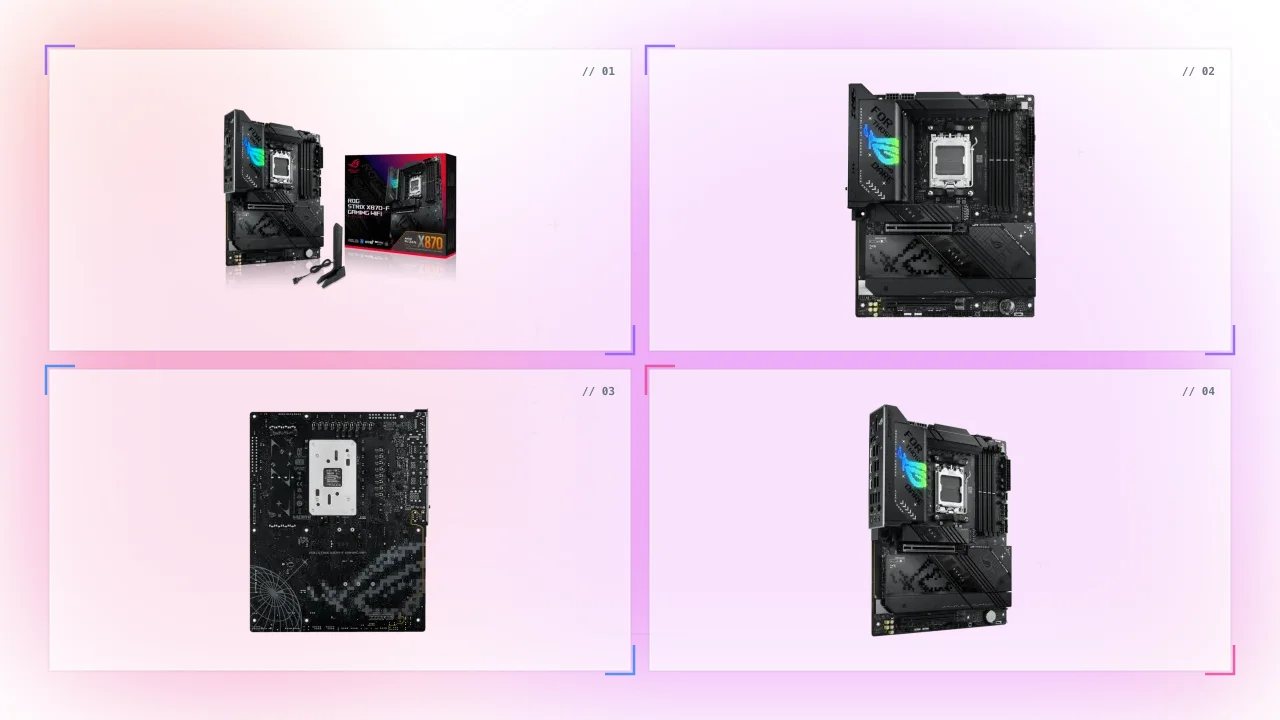
Asus Rog Strix X870-F Gaming WiFi Motherboard in Oman
Struggling to find a gaming motherboard that supports the latest Ryzen processors? Your gaming setup could be lagging behind without a high-performance...


